

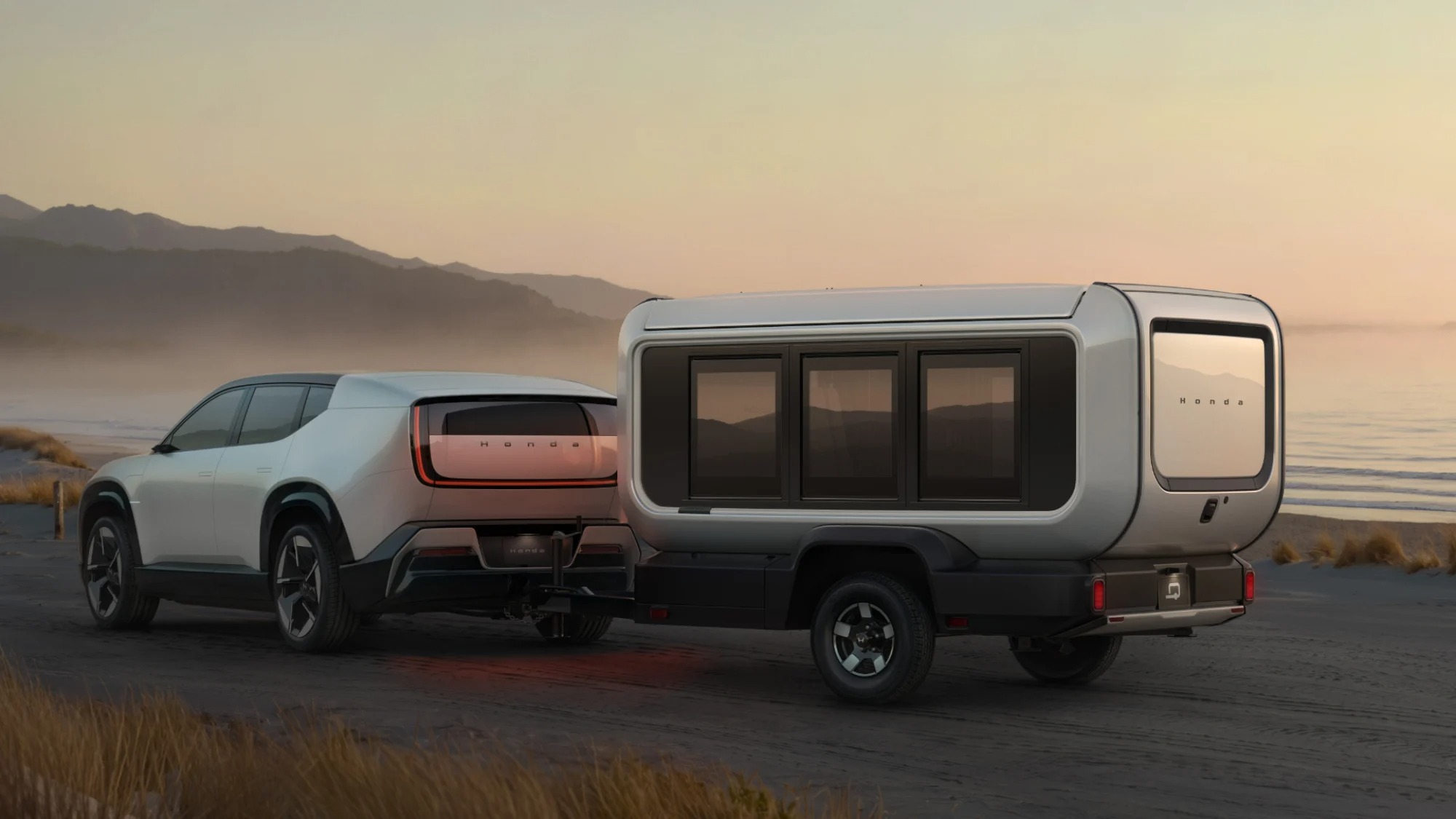
Honda has unveiled the Base Station Prototype, a compact and lightweight travel trailer developed by the company’s US-based research and development teams in California and Ohio. Conceived as a new entry point into camping and outdoor travel, the prototype reflects Honda’s long-standing emphasis on efficient packaging, modular design, and accessibility. The project was led by the same American Honda R&D group responsible for the Motocompacto electric scooter, underscoring the company’s interest in exploring mobility solutions beyond traditional vehicles. With pricing widely speculated to fall between $20,000 and $40,000, the four-berth Base Station is likely to attract significant interest if and when it reaches production. Unfortunately, Honda’s press release offers only a few images of the prototype; luckily, we came across this video that gives us a peek inside.
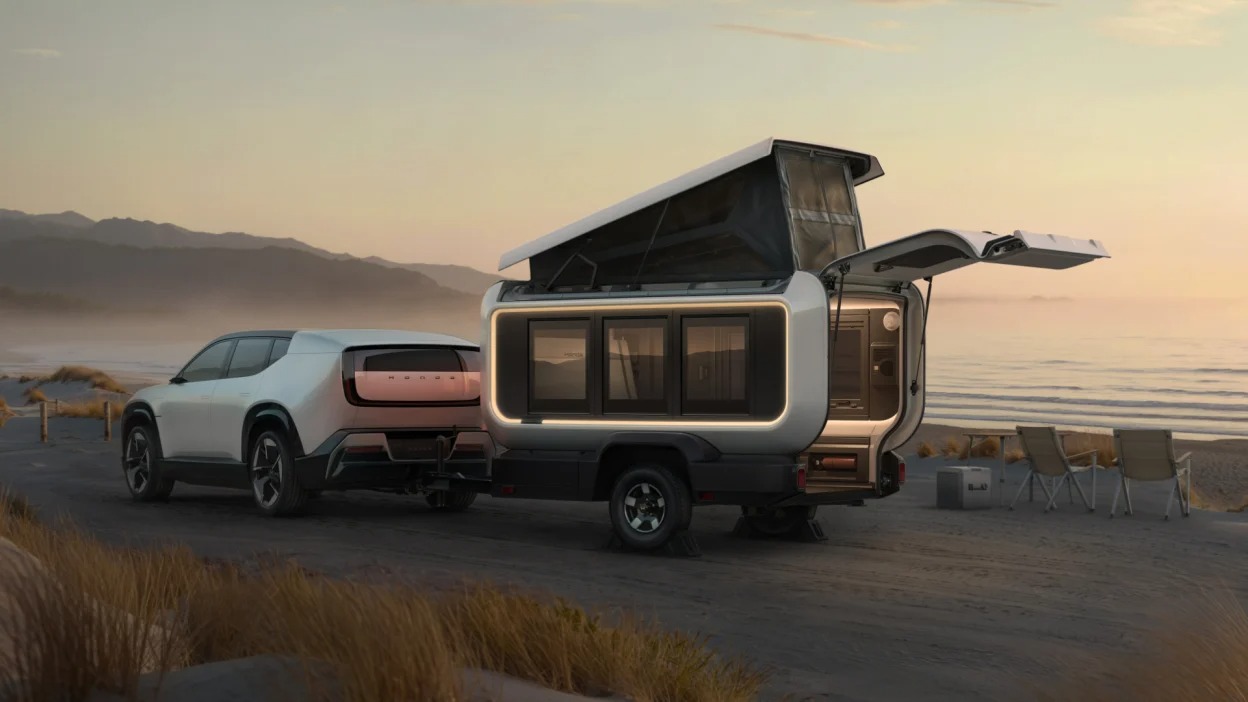
The Base Station Prototype was designed to be towed by a wide range of everyday vehicles, including compact SUVs such as the Honda CR-V and Toyota RAV4, as well as newer electric models like the Honda Prologue and the forthcoming Honda 0-Series SUV. Central to the design is Honda’s “Man Maximum/Machine Minimum” philosophy, which prioritizes usable human space while minimizing the footprint of mechanical systems. This approach has long been a hallmark of Honda’s cars and light trucks, and it carries over directly into the Base Station Prototype. Despite its compact exterior dimensions, the trailer is designed to fit within a standard residential garage or parking space while offering an interior that feels open and bright. Five large side windows provide abundant natural light and can be removed or swapped out for alternative accessories, allowing owners to adapt the trailer to different uses or environments.
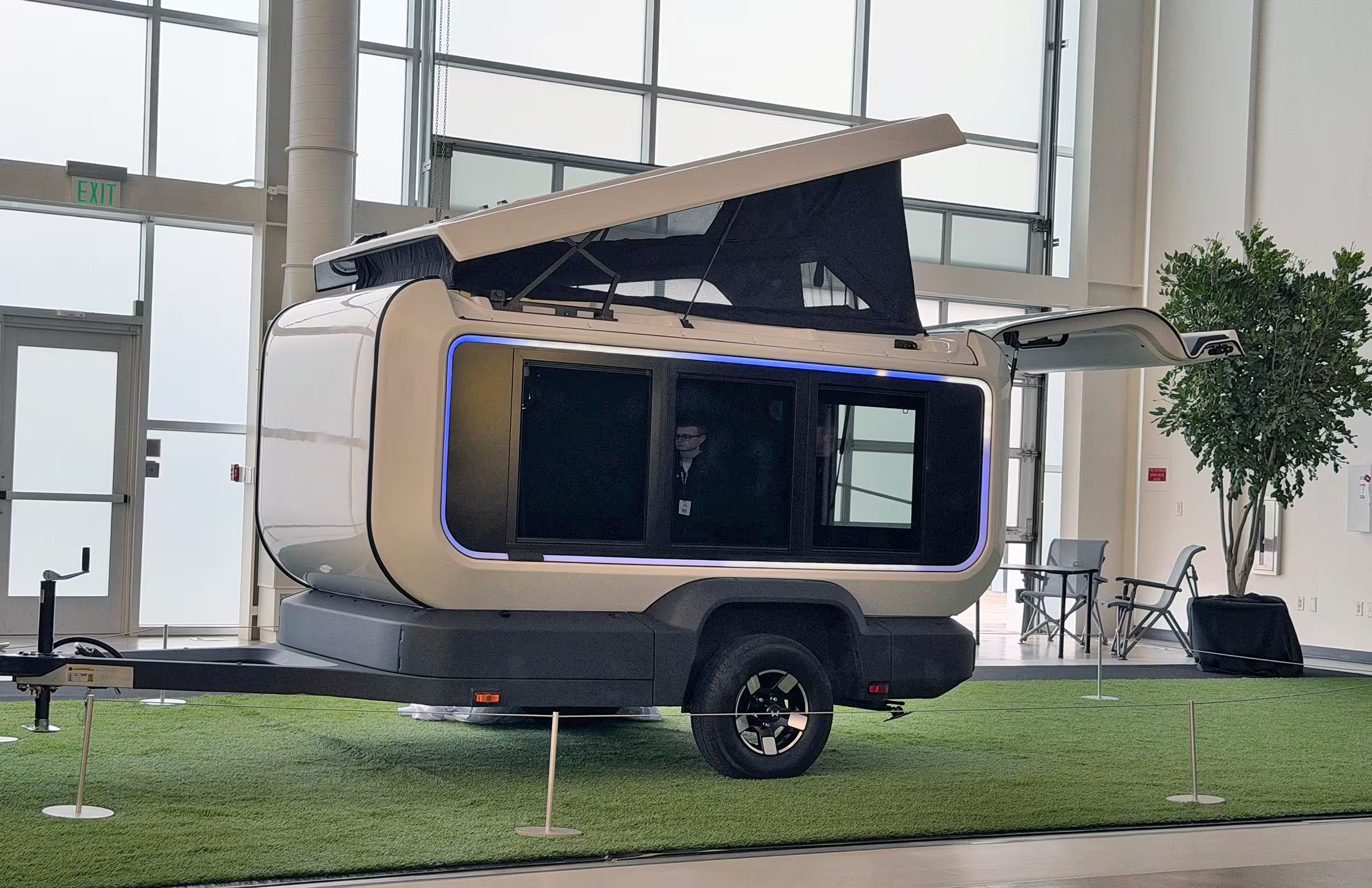
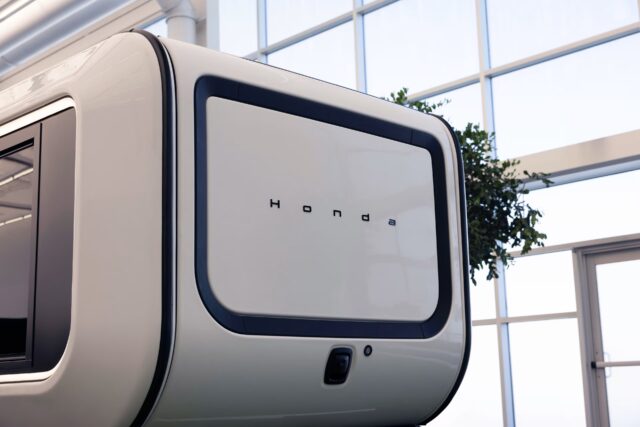
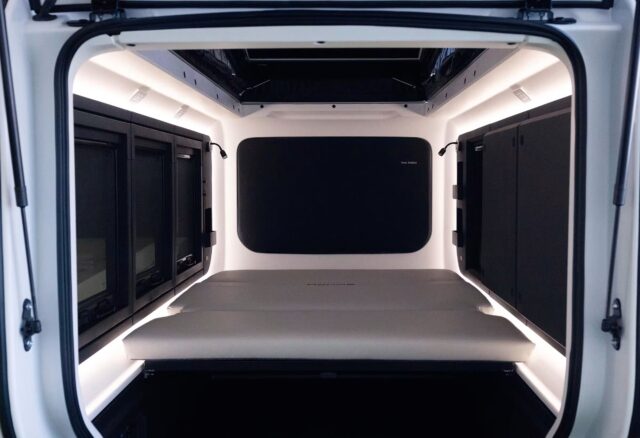
Interior flexibility is further enhanced by a pop-up roof mechanism that increases interior height to approximately 7 feet when deployed, creating comfortable standing room. At the rear, a top-hinged tailgate opens to connect the interior space with the surrounding campsite, encouraging indoor-outdoor flow, but hopefully well sealed against dust ingress. Sleeping accommodations are arranged to suit a small family, with a futon-style sofa that converts into a queen-sized bed and an optional bunk designed specifically for children. Programmable ambient light rings surround the windows, allowing occupants to adjust brightness and color. These lights also serve a practical purpose by illuminating the campsite during nighttime setup or breakdown, reducing reliance on external lighting.
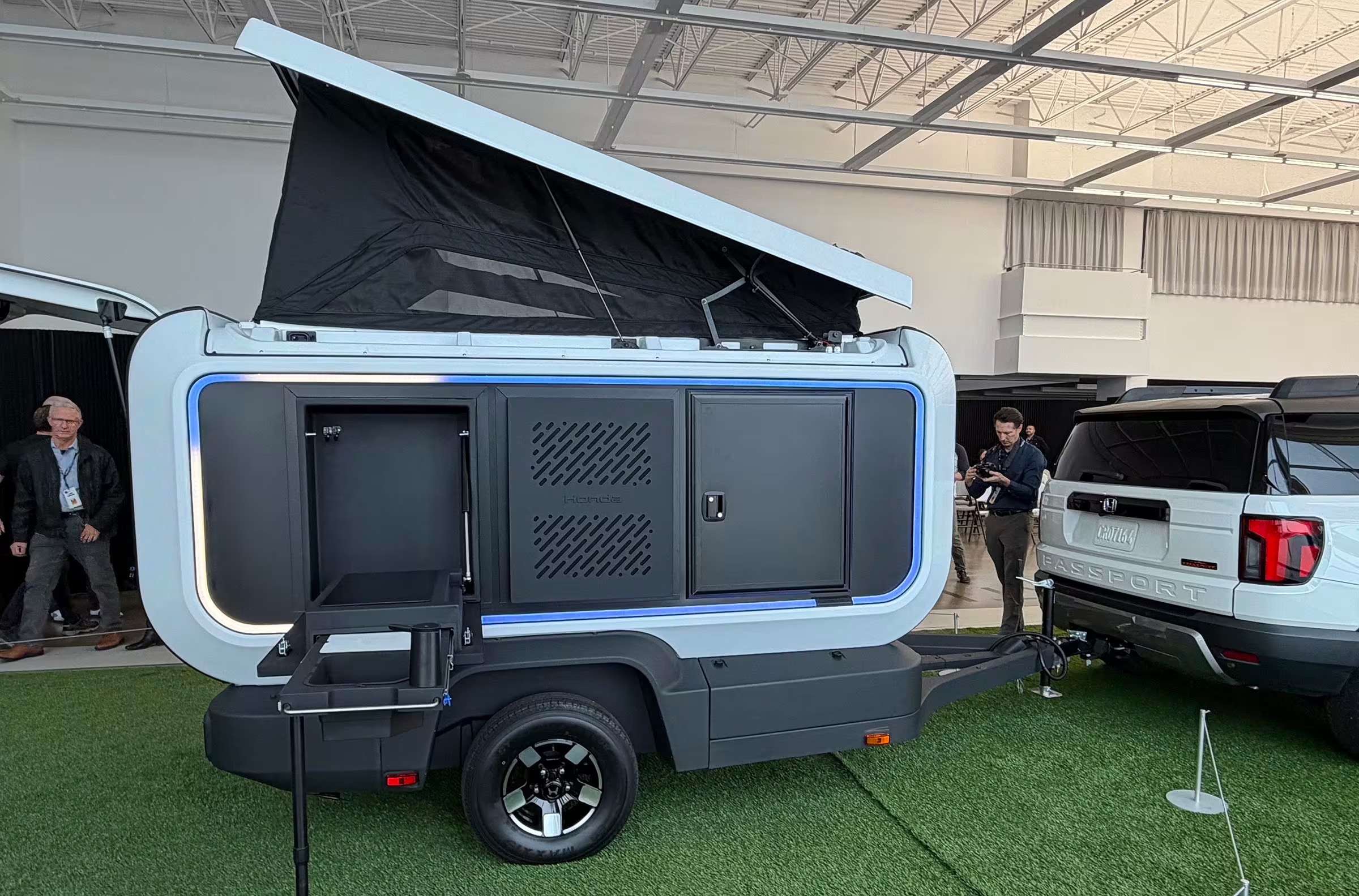
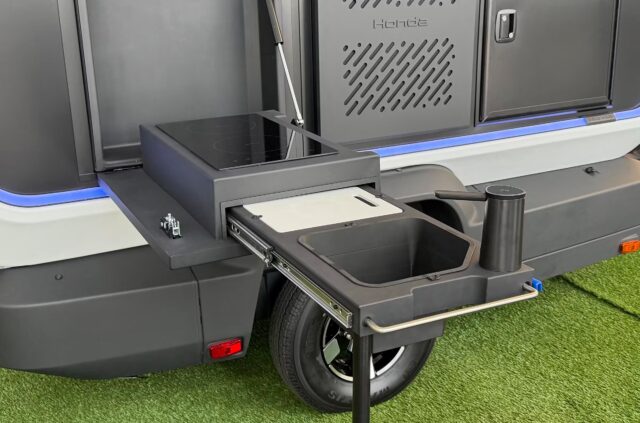
The modular nature of the prototype is highlighted through a range of integrated and optional equipment. The showcased configuration includes an air-conditioning system, an external shower, and an outdoor kitchen equipped with running water and an induction cooktop. Off-grid capability is supported by a lithium battery system paired with an inverter and integrated solar panels, enabling zero-emissions power generation during remote stays. For longer trips or higher energy demands, the Base Station can be connected to campground electrical hookups or to an external Honda generator.
Read More: Overland News of the Week
Our No Compromise Clause: We do not accept advertorial content or allow advertising to influence our coverage, and our contributors are guaranteed editorial independence. Overland International may earn a small commission from affiliate links included in this article. We appreciate your support.
