


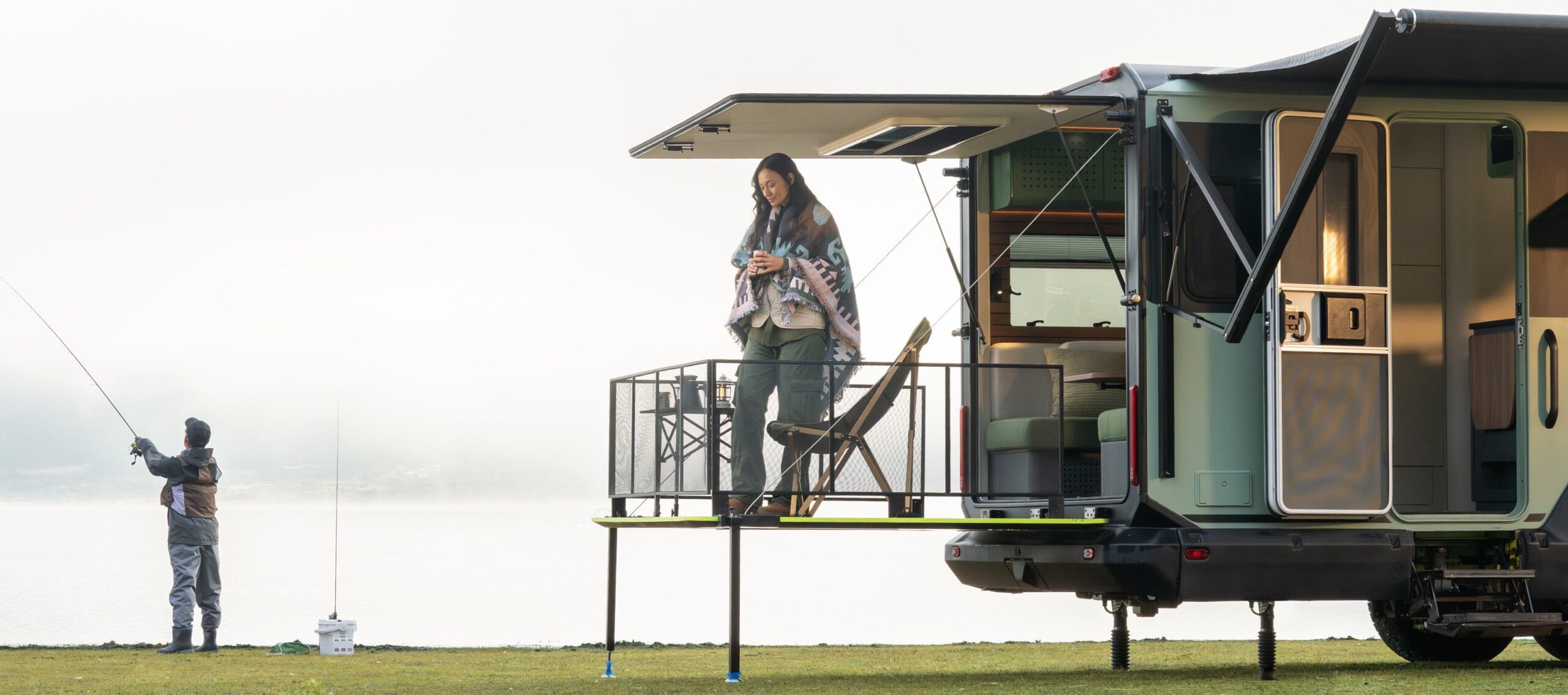
If you are in the market for an upmarket RV trailer that offers the comfort of a compact city apartment, sleeping space for a family of four, generous storage for outdoor gear, and the ability to remain off-grid for extended periods, the Evotrex PG5 is designed to meet those expectations. Conceived as a solution for travelers who want to venture far beyond serviced campgrounds without sacrificing comfort or electrical reliability, the PG5 reflects a growing shift in the RV sector toward energy independence and longer-duration travel. Rather than focusing solely on luxury finishes or lightweight minimalism, Evotrex has built its first trailer around a central question increasingly relevant to modern overland and RV travel: how to generate, store, and manage enough power to live comfortably in remote places for days or weeks at a time.
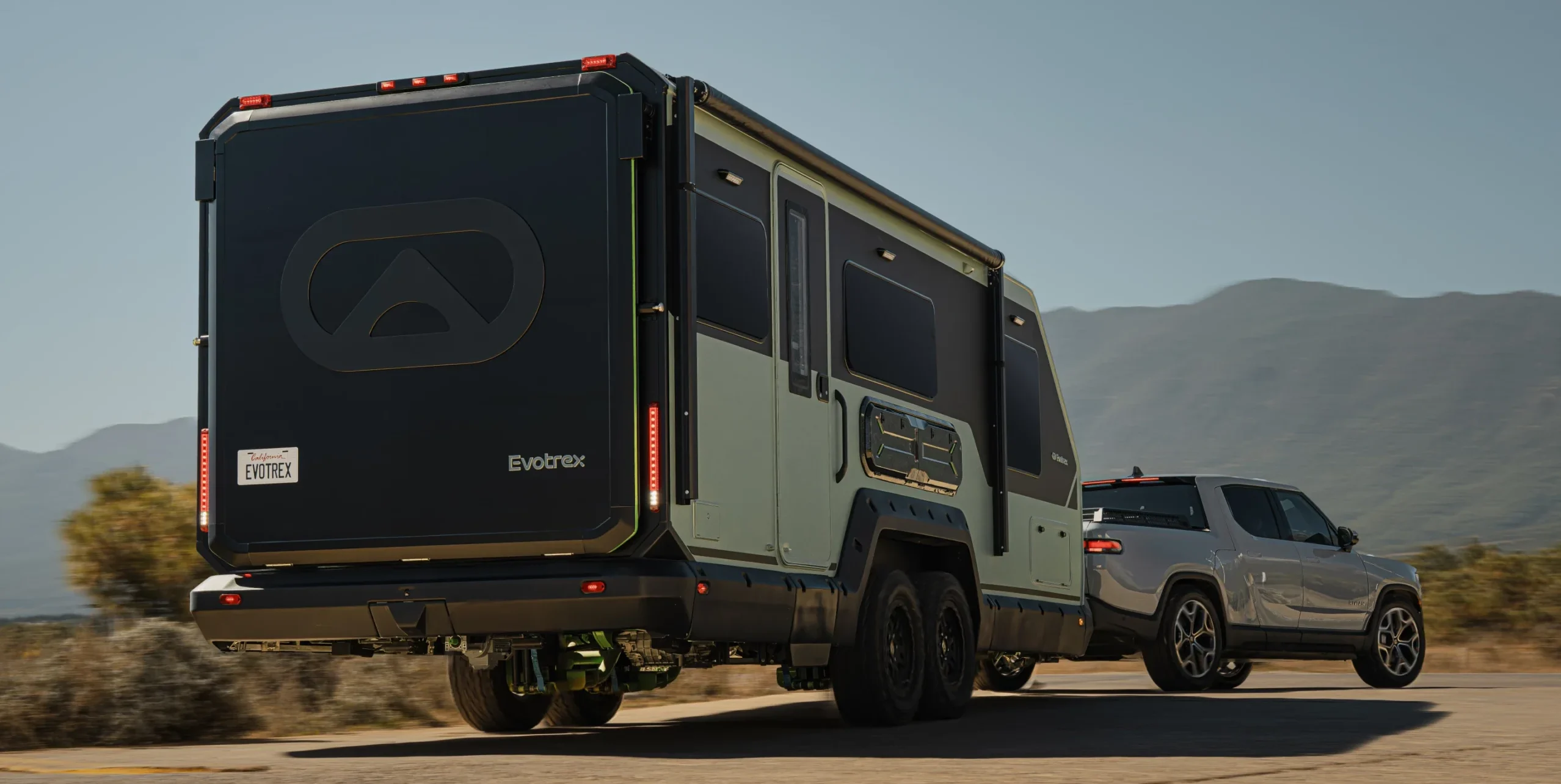
That focus on power autonomy places the Evotrex PG5 in a category of its own. While many contemporary trailers rely heavily on solar panels and ever-larger battery banks, Evotrex has opted for a hybrid approach that combines electric storage with onboard generation. The result is a trailer intended not only for traditional towing vehicles, but also for users exploring the intersection of internal combustion, electric propulsion, and off-grid living. The PG5 was unveiled publicly at the 2026 Consumer Electronics Show in Las Vegas.
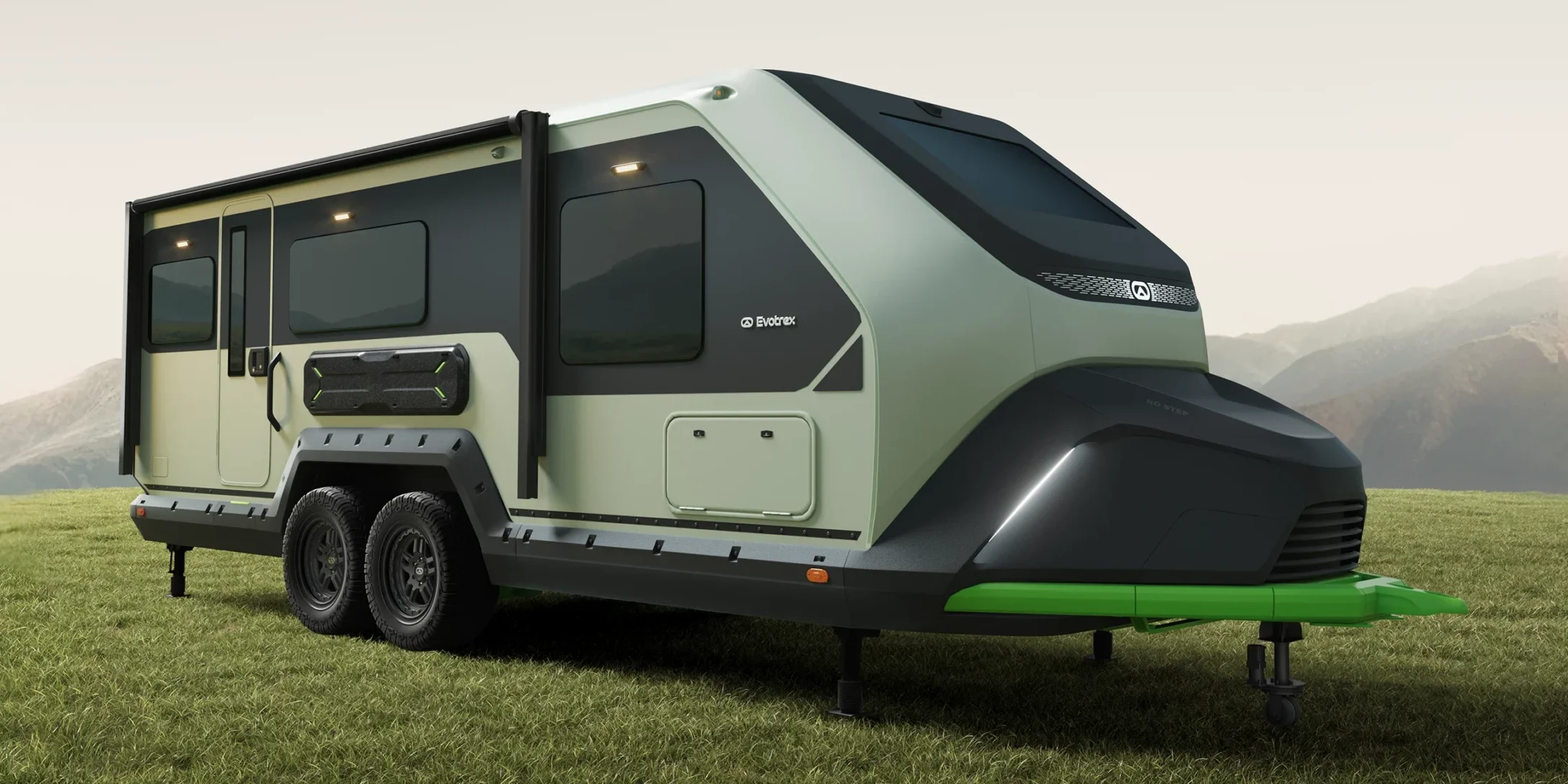
Evotrex is a California-based startup founded by a team of executives and engineers with backgrounds in battery technology, consumer electronics, and automotive systems. The Evotrex PG5 is designed as a towable RV trailer that integrates multiple energy generation and storage sources into a single, unified system. At the center of this architecture is a 43-kilowatt-hour automotive-grade lithium-iron-phosphate battery that powers onboard appliances, lighting, climate control, and other systems typically found in modern recreational vehicles. Roof-mounted solar panels supplement the battery, helping to offset daily electrical consumption when conditions allow. In addition, Evotrex has integrated an onboard gasoline-powered generator, branded as Horizon, that automatically recharges the battery when solar input is insufficient or energy demand increases. Evotrex claims the PG5’s generator is less noisy than conventional RV gensets, mostly because it runs more efficiently at optimized speeds for shorter durations thanks to battery buffering.
The hybrid configuration is designed to allow the PG5 to sustain electrical loads for extended periods without relying on external hookups. To help owners understand how the system performs in practice, Evotrex offers an interactive range-and-energy calculator on its website. The tool allows users to estimate travel range and off-grid duration based on energy usage, battery capacity, and fuel availability, providing a clearer picture of how long the trailer can operate independently under different conditions. The company has also developed its own in-house management system and proprietary app.
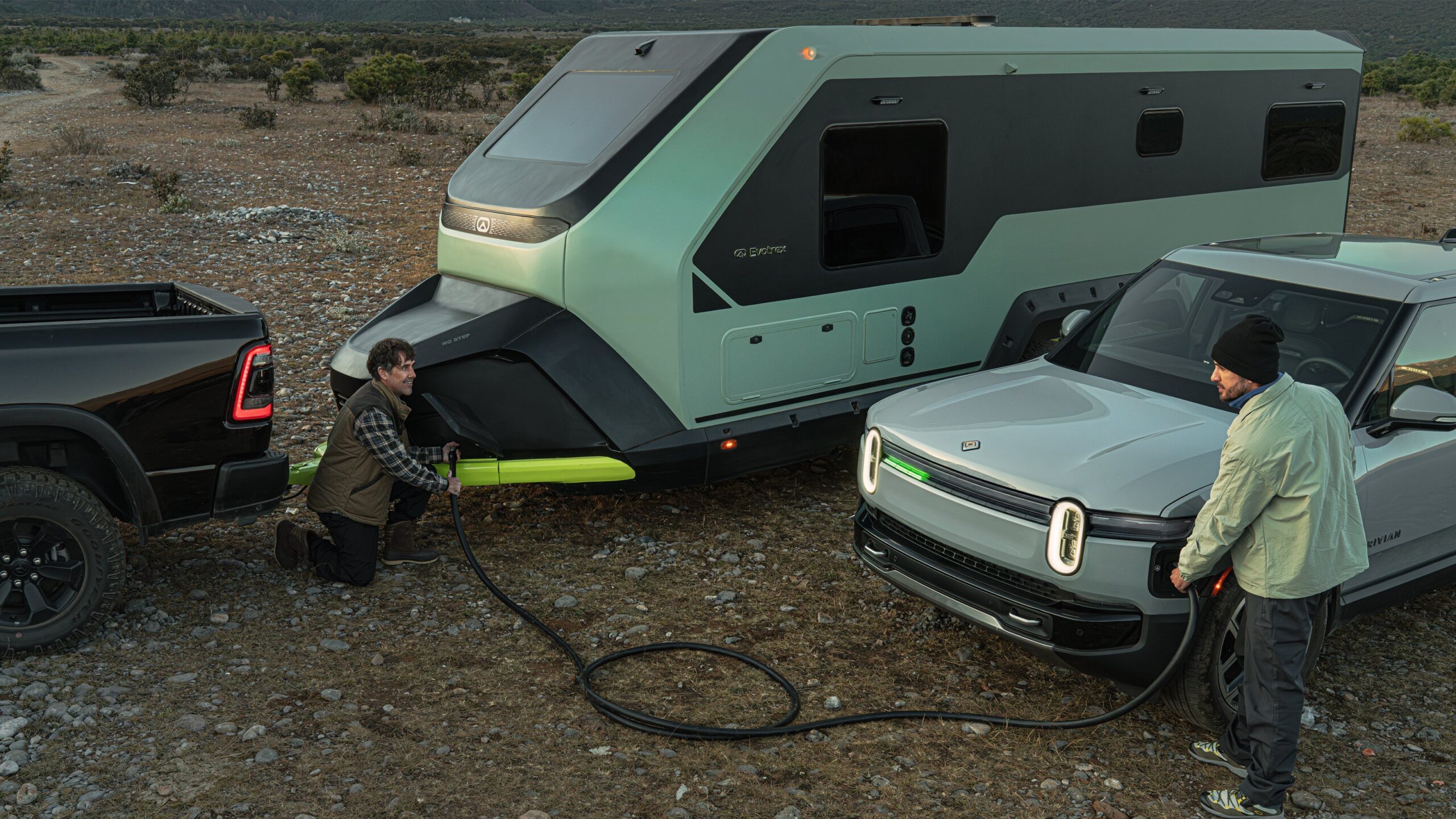
Evotrex has also designed the PG5 to support bidirectional power flow. The trailer can export electricity via standard outlets and DC fast-charging ports, allowing it to charge electric vehicles, power tools and equipment, or serve as a backup power source for a home during outages. This capability broadens the trailer’s potential use beyond camping, aligning it with broader trends around mobile energy storage and resilience.
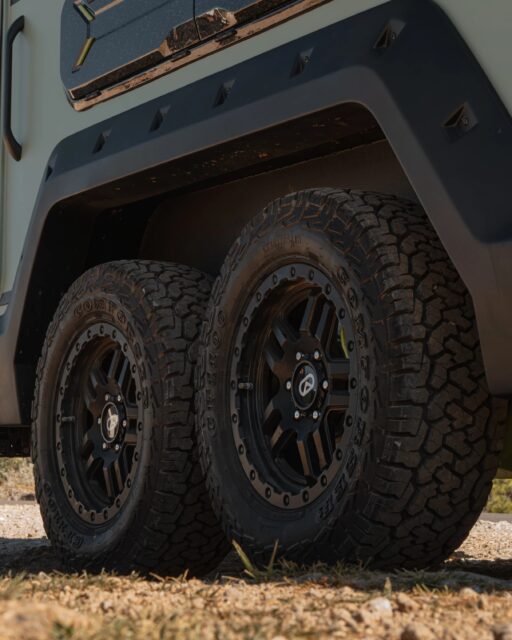

Beyond its electrical systems, the PG5 is equipped for travel away from paved roads. It rides on a high-strength dual-axle chassis with air suspension, allowing adjustable ride height, paired with all-terrain tires for access to dispersed campsites. Evotrex also highlights an active power assist feature that uses an electric motor integrated with the trailer’s hitch interface to provide torque assistance while towing. The same system enables remote manoeuvring of the trailer in camp via a tablet interface, simplifying placement in tight or uneven spaces. The Evotrex PG5 Pioneer has a gross vehicle weight rating of 9,500 pounds and a dry weight of 8,350 pounds, while the higher-spec PG5 Atlas has a 9,900-pound GVWR and a dry weight of 8,900 pounds.
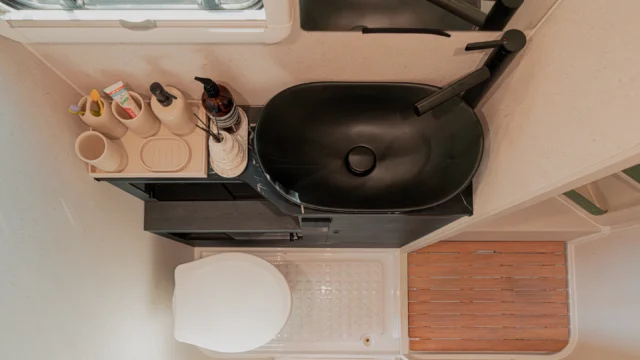
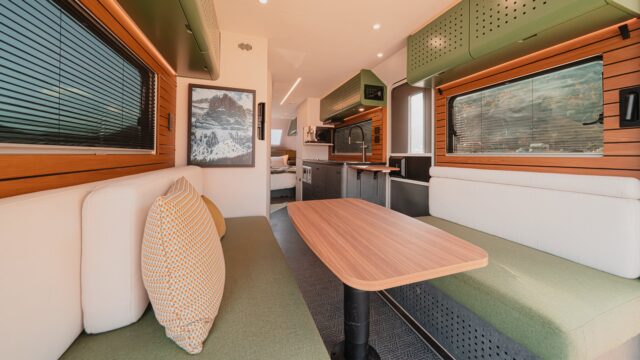
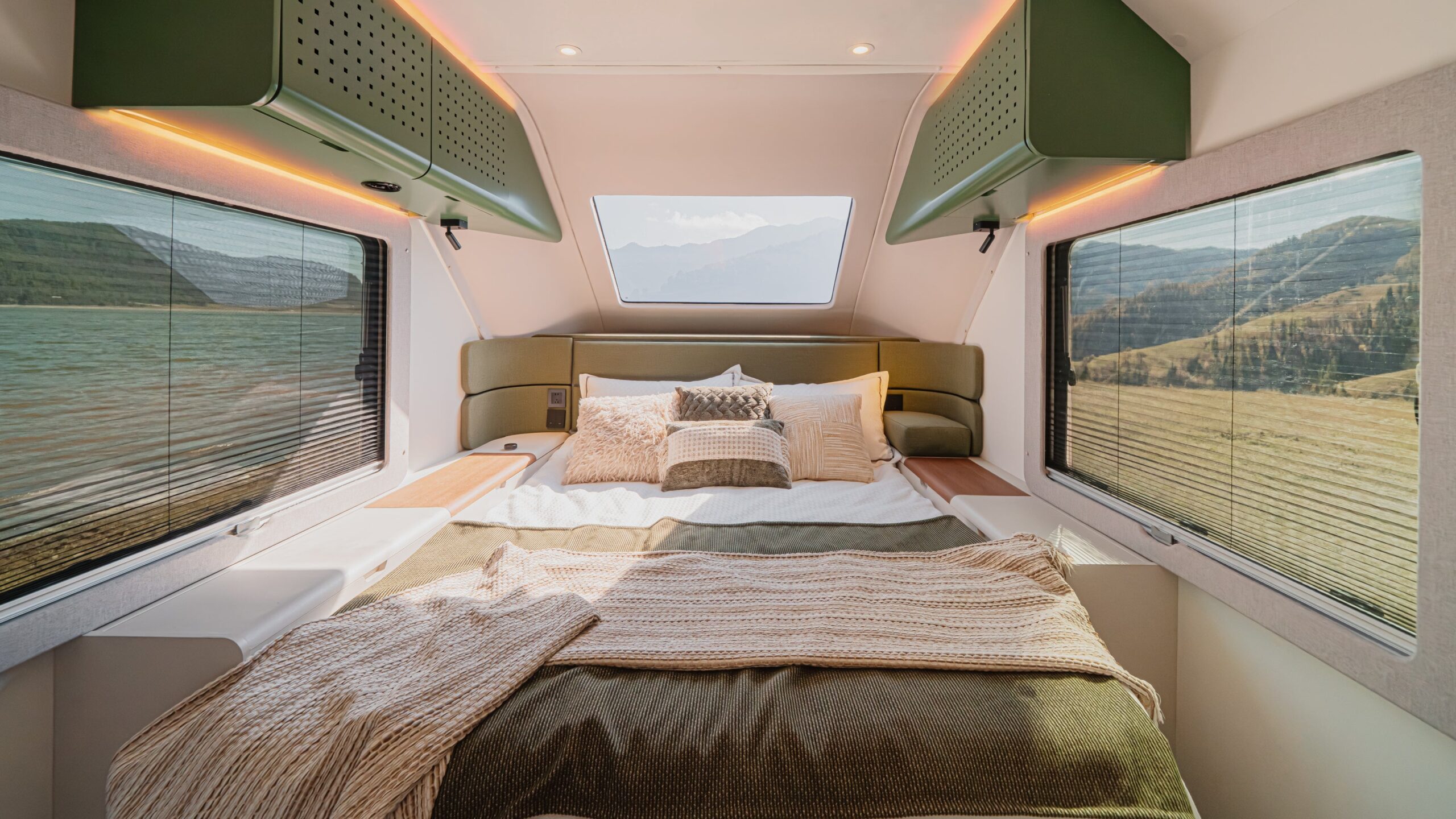
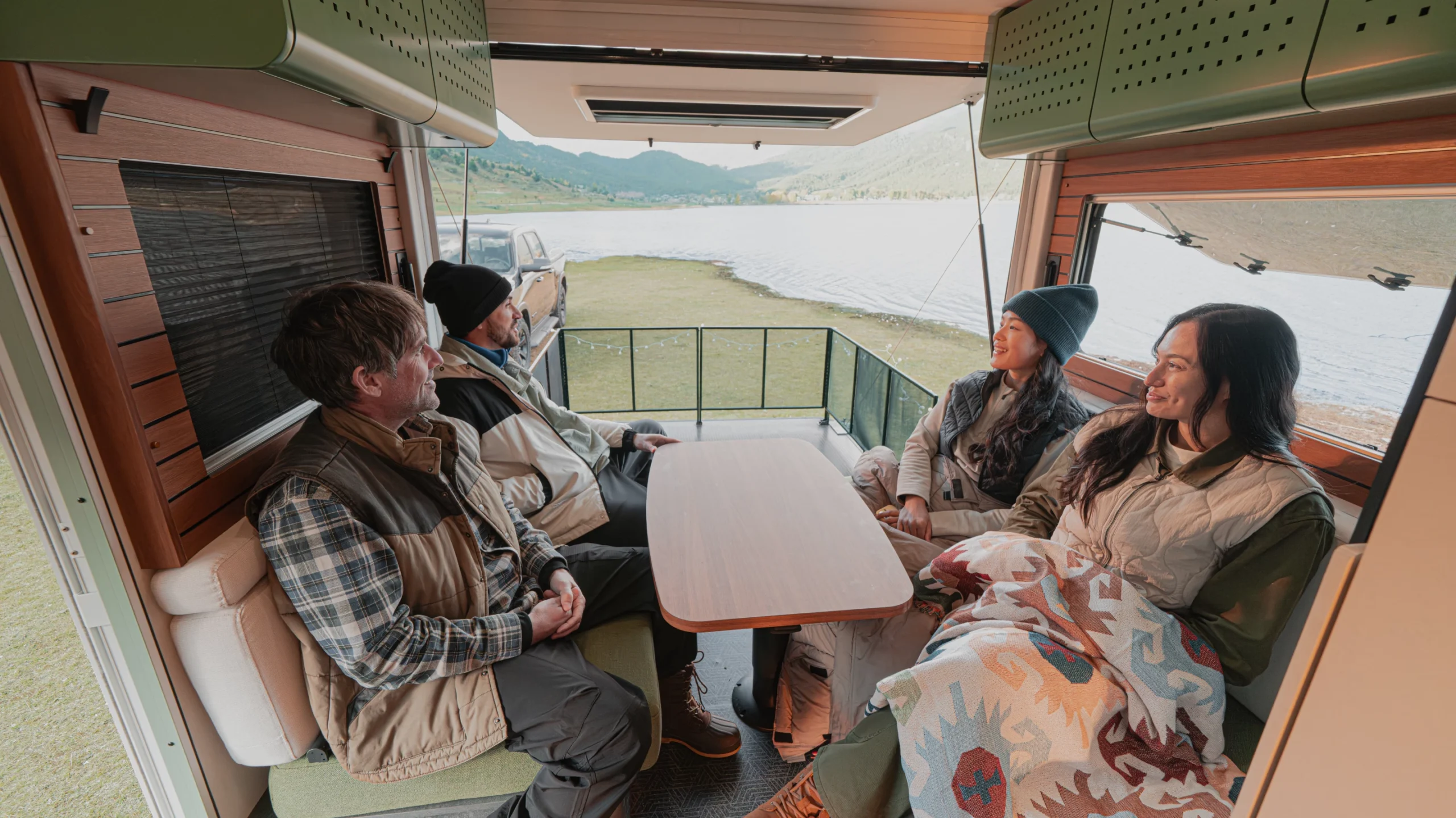
Inside, the PG5 is laid out to support extended stays with residential-style amenities. The interior includes a full bathroom with a shower, an all-electric kitchen featuring an induction cooktop and a convection microwave air fryer, a full-size refrigerator, and sleeping space for up to four adults. A drop-down coffee machine is integrated as standard, though the company notes it can be replaced with alternative appliances if desired. Climate control systems are designed for year-round use, with waste heat from the generator repurposed to provide cabin heating when conditions require.
Evotrex began accepting preorders for the PG5 in January 2026, with a refundable deposit. Pricing for the base Pioneer model starts at approximately $119,990, while the fully equipped Atlas specification is listed at around $159,990. The company has indicated that production is planned for late 2026, with initial deliveries expected in early 2027 across markets including the United States, Australia, and Canada.
Read More: Overland News of the Week
Our No Compromise Clause: We do not accept advertorial content or allow advertising to influence our coverage, and our contributors are guaranteed editorial independence. Overland International may earn a small commission from affiliate links included in this article. We appreciate your support.
