


My headlamp cut the pre-dawn gloom, illuminating the lowland marsh as I hopscotched from grass tuft to grass tuft, avoiding an ankle-soaking plunge along the shoulder of the Río Serrano. It was 4:00 a.m., and the March autumn sun still slumbered behind the Andes. I found the opening to the riverbank I’d scouted the night before and stepped onto the flat, polished stones. Ahead, Los Cuernos (The Horns) of Torres del Paine National Park loomed like Mordor in The Lord of the Rings.
Sans tripod, I improvised, using river rocks and driftwood to fashion a stable perch for my camera, desperate to capture longer exposures in the pre-dawn light. Deep shades of scarlet and plum soon carpeted the sky as the first rays of dawn pierced the horizon. My camera shutter opened, taking a long look at the canvas of jagged peaks and cumulus clouds, then closed. For two hours, I repeatedly triggered the shutter button, watching the sky and Los Cuernos carousel through a kaleidoscope of colors—pure magic.
By 7:00 a.m., the light show was over. Hiking back to base camp, I passed two photographers approaching the river, cameras in hand. I sigh, disappointed for them. That extra hour or two of sleep had cost them dearly.

Five Truths of Landscape Photography
I’m not going to drown you in technical jargon or camera specs. There are a billion hours of online videos with gear reviews and the rules of composition that you can watch if you’re ever suffering from insomnia. We humans crave rules, but ironically, we’re hardwired to break them. Over the years, I have discovered a few truths that will make your landscape photographs sing, whether you’re using a $5,000 mirrorless camera or just your smartphone.
1) Landscape photography lives on the fringes.
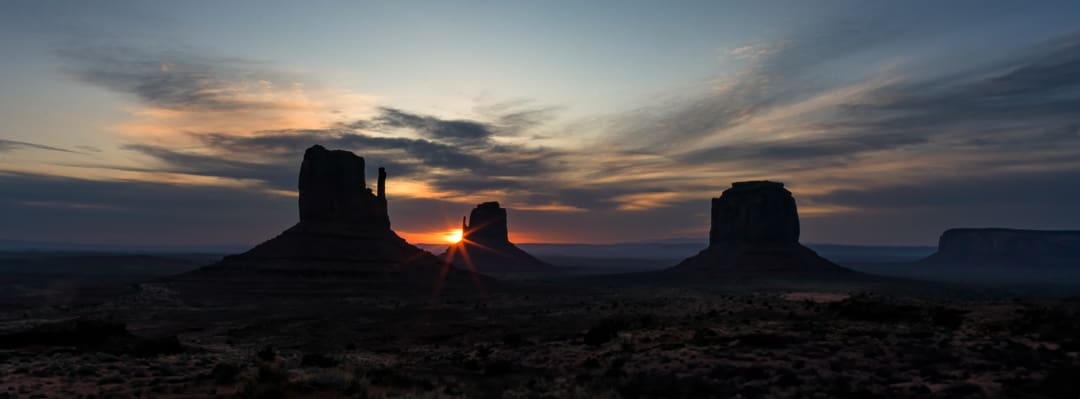
I can’t ever recall arriving at a location to find that another photographer had beaten me to it. And without fail, in the evenings, any photographer in the vicinity has packed up and left before I have. I’m always the first in and last out. Why? Because magic happens when you least expect it. Photography literally means drawing with light. It’s at the edge of the day when the sun’s rays are just below the horizon (blue hour) or at a low angle (less than 6°), and the light is diffused by dust particles and water vapor to create the golden hour. You should arrive at your desired shooting location well before blue hour and be willing to stay long into the nautical twilight. To know the exact direction the sun will rise or set, and the precise minute when blue hour and golden hour begin, I use the PhotoPills app. I rely heavily on its VR function to identify where the sun or moon’s position will be on the horizon so I can place my tripod precisely where I desire well beforehand.
2) Don’t shoot at eye level.
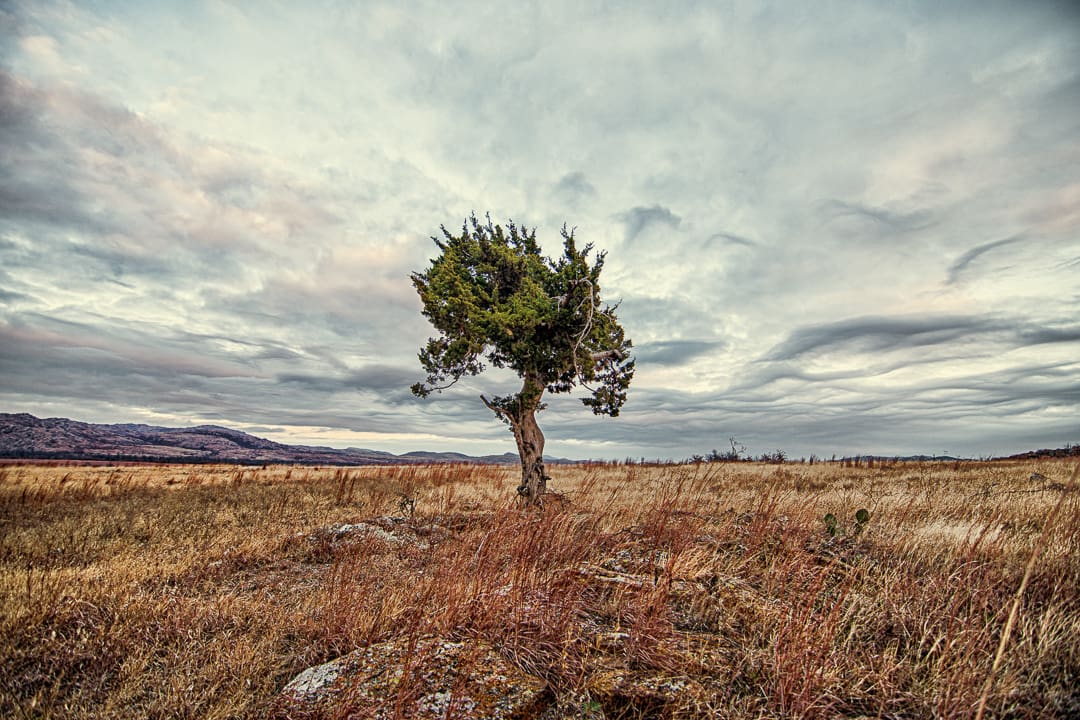
We all see the world from our own height, be it 5’10”, 5’2”, or 6’4”, but your camera should never be restricted to that same everyday perspective. That’s why I always carry a 5-foot step ladder in my overland vehicle. Just being 3 or 4 feet higher can be the difference between an award-winning image and a humdrum vacation photo. Climb on the hood of your Land Rover or the roof of your camper. Raising your camera raises your photography. It’s why we love drone shots.
Likewise, don’t be afraid to go low. Get on your stomach or even lower—submerge yourself in a creek bed or wade into the ocean. Dig a hole in the sand or snow. (Your recovery shovel pulls double duty here, getting your photography out of its own ruts.) The closer your camera is to the ground, the more dramatic the images become. And one last recommendation is to bring knee pads. Nothing ruins a low-angle shot faster than planting your kneecap on a root or sharp rock. I always keep a pair behind the driver’s seat.
3) Bad weather makes for better pictures.
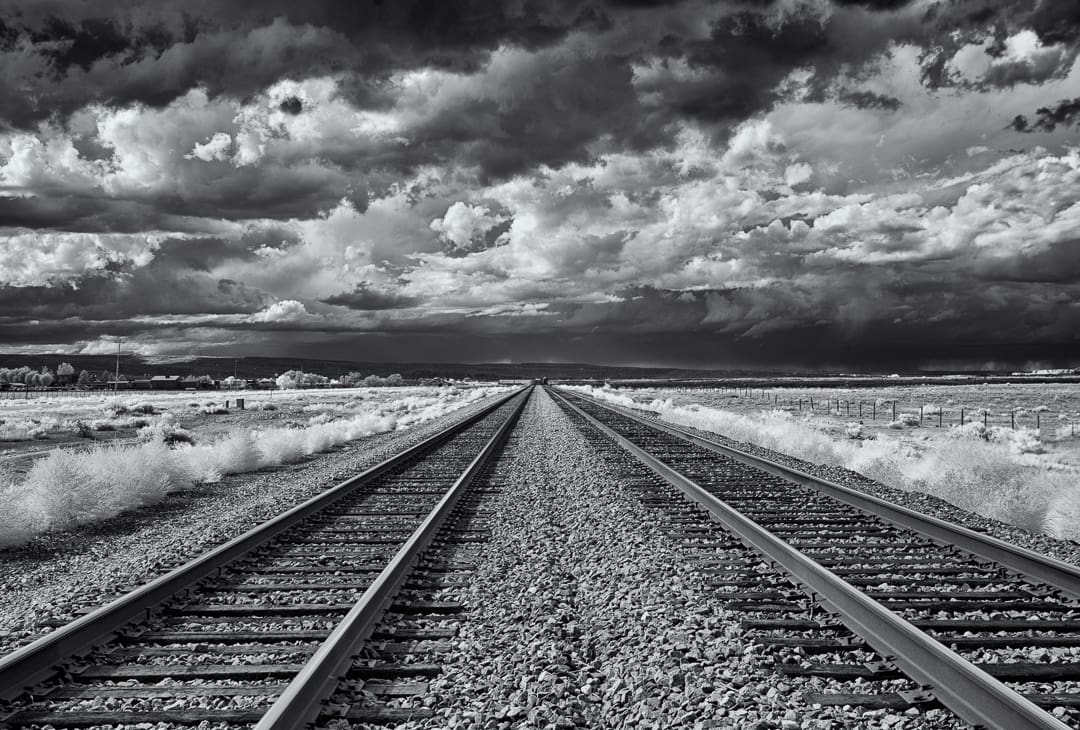
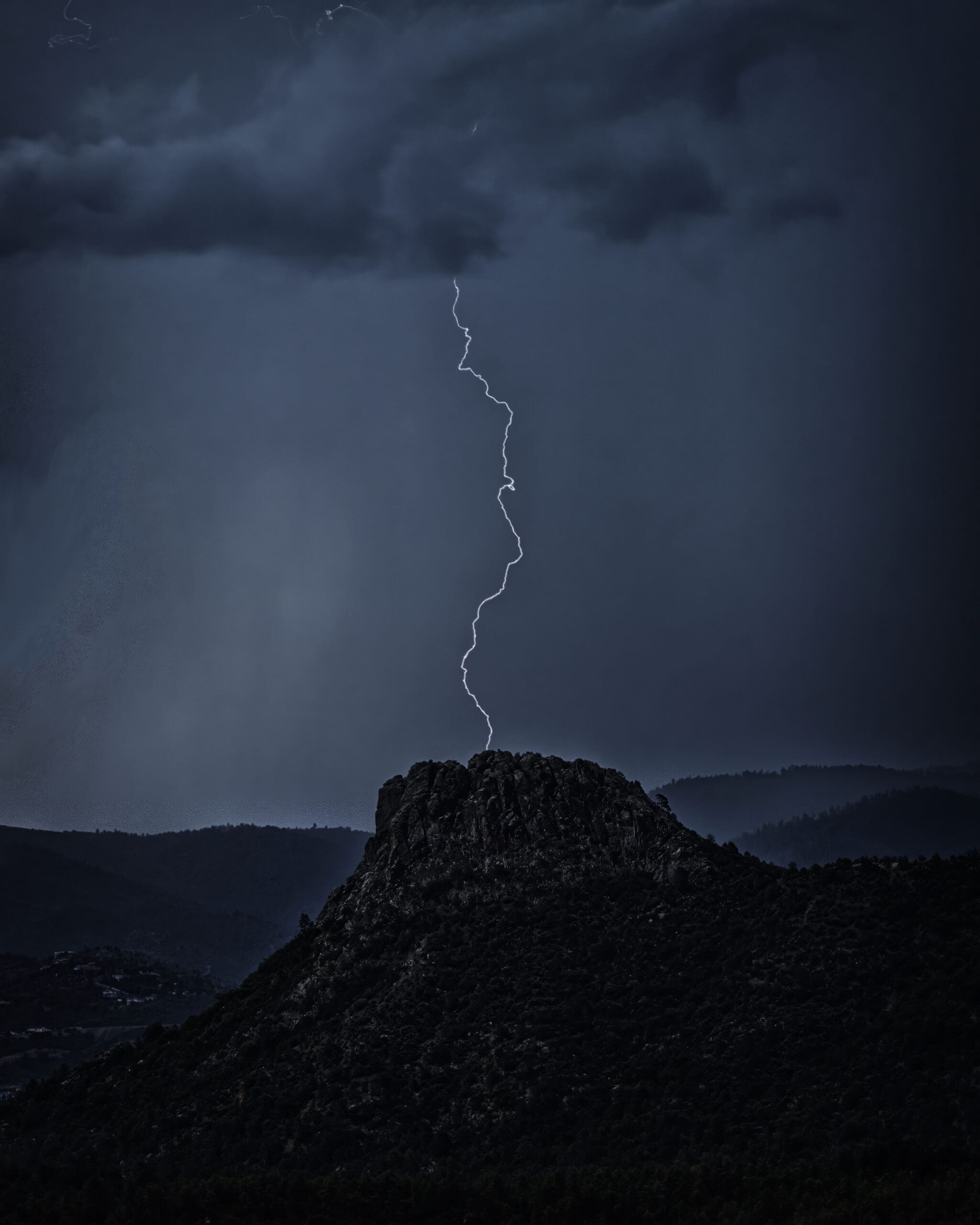
Clear, sunny days are the bane of compelling landscape photography. Pray for rain. You want brooding storm clouds, ethereal fog, dramatic lightning, and so forth. You will get wet, cold, and uncomfortable if you don’t have the right protection for yourself and your gear. I always carry a rain cover for my camera and camera bag. I pack layers of clothing for warmth, and a Gore-Tex shell and pants to keep dry. If lightning is in the vicinity, I cover my camera, mount it on my tripod (securing the tripod with sandbags), and trigger the shutter remotely from the safety of my vehicle cabin.
Again, landscape photography lives on the fringes—as the storm approaches or as it dissipates. These are the moments where rainbows, celestial shafts of light, and distant downpours manifest themselves. As with sunrises and sunsets, check your weather apps regularly. If dark clouds are in the forecast, charge your camera battery and head out early to find your spot.
If you must shoot on a cloudless day, frame your shot to minimize the sky. Ideally, that stark blue sky should never occupy more than a third of your image.
4) Don’t rush.
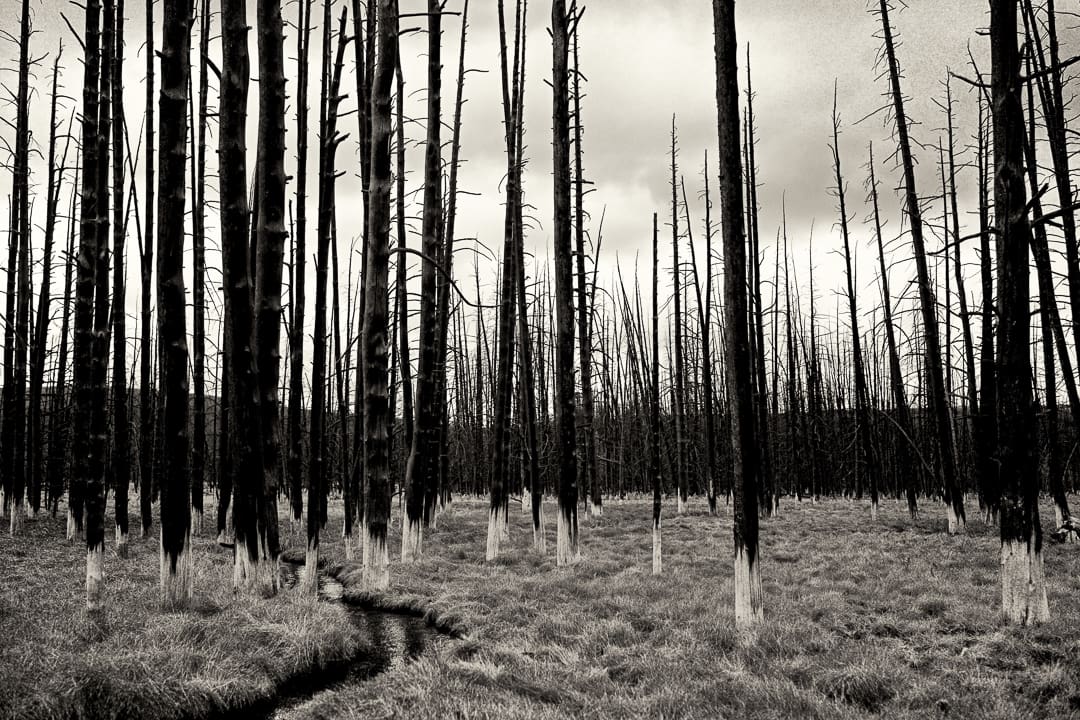
As an overlander, you may not have the luxury of scouting a location beforehand. However, when you come across a landscape you find interesting, stop and take five minutes to look at your scene before shooting. In doing so, you’ll inevitably discover superior angles and compositions, revealing leading lines you might have otherwise completely overlooked.
As a storyteller, I’m always thinking about the narrative within each image. Tapping the brakes for five minutes allows me to determine what I want to communicate in the shot. Am I trying to convey a sense of place or freeze a moment? Is there a detail in the foreground that I should include to add texture to my story, such as a person, vehicle, building, or animal? Am I emphasizing scale or intimacy? Slowing down allows your eyes and mind to connect new dots and discover what isn’t obvious upon first glance.
And here’s a critical tip: always look behind you. With our eyes fixed in front of our heads, humans are always looking forward and often forget to turn around. But frequently, the best shot is in the rearview mirror. Several years ago, as I was exiting the eastern part of Grand Teton National Park, I glanced in my rearview mirror just as I summited a ridge. A splash of orange reflected in the glass and seized my eye. I screeched to a halt, raced to an open spot 50 yards off the road, set up my tripod, and captured an amazing silhouette of the Teton Range.
5) Separate from the crowd.
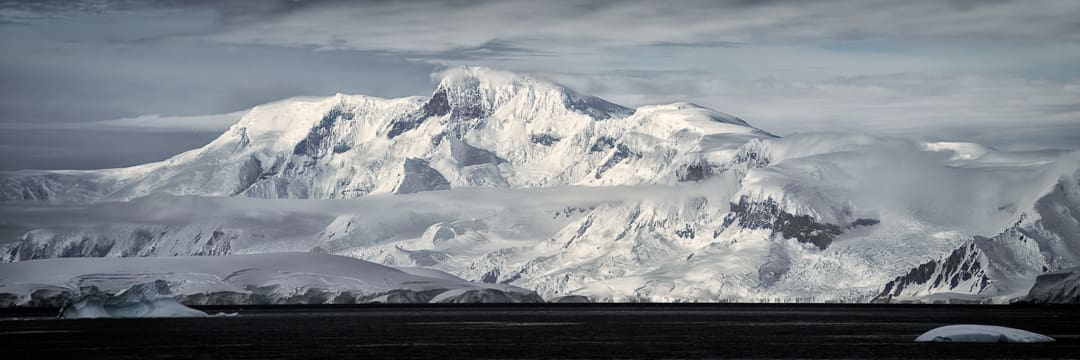
Visit the Grand Canyon or any popular landmark at sunset and you’ll find scores of photographers, shoulder-to-shoulder, capturing identical images—the very same ones you’ve seen on postcards and calendars. Easy access creates repetitious photos. Differentiating your photography requires separating yourself from the crowd, venturing where others aren’t willing to go, or can’t.
The inherent beauty of overlanding lies in being able to explore the less-trodden paths. Likewise, as a photographer, you should be seeking the views unseen by the masses. Two of the most overlooked aspects of photography are fitness and fear. Postholing through thigh-deep snow or slogging to the top of a dune with 40 pounds of camera gear on your back requires a certain base level of fitness. Extreme conditions, extreme temperatures, and extreme elevations add to the danger and risk. In 2018, while shooting for a canyoneering documentary outside Moab, Utah, I became overheated and dehydrated during the steep, oven-hot approach to the initial rappel. Lightheaded and seeing stars, I was forced to stop and question whether or not I should push on. Fortunately, after redistributing some of my camera gear into the packs of my teammates and taking a long rest in the shade, I was able to continue our “Ten Canyons in Ten Days” adventure without incident.
Fitness for photography is a daily commitment. Start by maintaining a base level of aerobic fitness; then, as you prepare for an upcoming trip, tailor your training to raise your fitness level to meet or exceed the challenge.
Fear is the other element to consider. Hiking the trail to Angel’s Landing in Zion National Park will paralyze some, and not even faze others. Getting to that unique spot shouldn’t be dangerous, as long as you have the competence and skill set to get there. The most important factor is to be spatially aware. A 2024 NBC News article reported that photography was the most lethal activity in Grand Canyon National Park, accounting for the majority of falls. Never take a step while peering through your eyepiece.
Whenever I explore a location, I meticulously assess potential dangers: slipping, rockfall, wind, ice, lightning exposure, wildlife, and of course, vehicles. Once, while photographing an oncoming train, I assumed I was on an abandoned railroad track only to realize seconds beforehand that I was kneeling in the path of the speeding locomotive. I leaped to the side of the railroad bed in the nick of time, with my nerves rattled for 30 minutes after the narrow miss. It’s a lesson I’ll always remember and one I’m embarrassed to admit.
Never cross fences or barriers that the park service has established for public safety. Respect private property and don’t trespass. No shot is worth getting shot. It never hurts to ask permission of the landowner—a friendly smile with your camera visible and an honest explanation of what you’d like to shoot will often grant you access to locations nobody else has seen. They’ll often accompany you and show you their favorite “secret” spots. I’ve been afforded rare opportunities and made new friends simply by knocking on a door or asking around at the local café. I always share my contact information with private landowners and offer to send them my favorite photographs taken on their land. Be transparent and courteous, and you’ll find people to be remarkably open.
Bonus Tip: Prepare for the unexpected.
Returning home from a shoot in Utah’s Valley of the Gods, I was reviewing my photos of the March moonset when a tiny speck caught my eye on one image. At first, I thought it was from dust on my sensor or lens. But as I scrolled through the series of photos, I noticed the speck moving diagonally in frame. I zoomed in and discovered a glowing red tail behind the dot. I’d captured a meteor entering Earth’s atmosphere next to the new moon. My naked eye could not see it when I took the shot, but there it was––a one-in-a-million moment that will not likely ever happen again. Which brings up another point: never delete photos in the camera. Always review images on a large monitor at an unhurried pace.
Whether you publish your landscape photographs or print them for your home and office, understanding and incorporating these practices will empower you to create truly captivating images that will fuel the dreams of your next grand adventure.
Rules of Thumb
- Focus 1/3 of the way into the scene for sharper images from foreground to back.
- Bracket images from 3 to 7 exposures at 1/3 stop increments to ensure proper exposure.
- Turn off VR in lenses when shooting from a tripod.
- Generally, use matrix metering during the day and spot metering during sunsets.
- Use neutral density filters to reduce light intensity and shoot at slower shutter speeds.
Editor’s Note: This article was originally published in Overland Journal’s Gear 2026 Issue.
Our No Compromise Clause: We do not accept advertorial content or allow advertising to influence our coverage, and our contributors are guaranteed editorial independence. Overland International may earn a small commission from affiliate links included in this article. We appreciate your support.
